Finding Calm in the Chaos: Simple Tools to Reclaim Your Peace
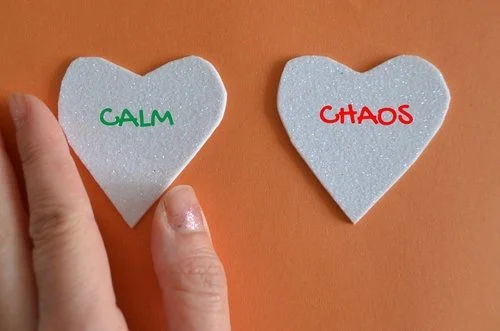
If you’ve been feeling more anxious, scattered, or just plain depleted lately — you’re not imagining it. And you’re not alone.
Whether it’s the constant hum of the news cycle, the pressure of packed schedules, financial stress, or simply the weight of trying to keep everything together — the world can feel like a lot right now. Here in Denver, we’re fortunate to be surrounded by mountains and wide-open skies, but even the most beautiful backdrop doesn’t automatically quiet the noise inside our heads.
The good news? You have more tools than you think. Here are a few that we come back to again and again — and that cost nothing but a few intentional minutes of your day.
Your Breath Is Always Available
Before you reach for your phone, your coffee, or the remote — try this: inhale for 4 counts, hold for 7, exhale slowly for 8. This technique, known as 4-7-8 breathing, is one of the simplest ways to activate your parasympathetic nervous system — your body’s built-in “rest and digest” response. It’s the antidote to the fight-or-flight loop that stress keeps us trapped in.
You can do this anywhere — at a red light on Colorado Boulevard, at your desk before a difficult meeting, or right before you step onto the mat. In Pilates, breath is the foundation. Every movement is built around it. That’s not a coincidence. When we breathe with intention, everything else starts to follow.
Start with just three rounds. See how you feel.
Step Outside — Even Just for 20 Minutes
We live in one of the most naturally stunning places in the country, and yet many of us rush past it on the way to the next thing. Research consistently shows that time in nature — even a short walk in a neighborhood park — measurably reduces cortisol, the hormone most associated with chronic stress.
You don’t need to summit a 14er to feel the benefit. A slow loop around Washington Park, a walk along Cherry Creek Trail, or even five minutes watching the Rockies turn pink at sunset can shift your nervous system in ways that are hard to explain but easy to feel.
Leave the earbuds at home if you can. Let it be quiet. A few minutes of quiet in nature are incredibly restorative.
Guard What You Let In
Staying informed is important. Marinating in bad news all day is something else entirely. There’s a meaningful difference between the two, and our bodies don’t always know it — they respond to the 24-hour news cycle as if every alert is a genuine threat.
Try giving yourself designated “news windows” — maybe 15 minutes in the morning and a quick scan in the evening. Outside of those windows, close the tab. Put the phone in another room. You can care deeply about the world while also protecting your capacity to show up in it.
Notice how you feel after a scroll session versus after a walk or a conversation with someone you love. Your nervous system is giving you data. Trust it.
Meditation — Even Two Minutes Counts
Let’s demystify this one. Meditation doesn’t require an app, a special cushion, incense, or 30 uninterrupted minutes in a silent room. It just requires a willingness to be still for a moment — and to keep coming back when your mind wanders (because it will, and that’s okay).
Try this: Sit comfortably. Close your eyes. Place one hand on your chest and feel your heartbeat. Take five slow, deliberate breaths. When thoughts come — and they will — just notice them and return to the breath. That’s it. Two minutes of this is not nothing. Over time, it rewires how your brain responds to stress.
Interestingly, Pilates is often described as a moving meditation — the focus required to coordinate breath with precise movement draws your attention fully into your body and out of your spinning thoughts. That hour on the mat? It’s doing more for your mind than you might realize.
Move Your Body to Reset Your Mind
We talk a lot about core strength, posture, and flexibility — and those things absolutely matter. But one of Pilates’ most underappreciated benefits is what it does for your nervous system. When you’re working through a sequence that demands your full attention, something interesting happens: the rumination stops. The to-do list fades. The anxiety that was running on a loop in the background gets interrupted.
Movement — intentional, breath-connected movement — is one of the most evidence-backed stress management tools we have. It regulates mood, improves sleep, reduces cortisol, and builds the kind of resilience that carries over into the rest of your life.
You don’t have to push hard to feel the benefit. Sometimes the gentlest sessions are the most restorative ones.
You Don’t Have to Do All of This
The goal isn’t a perfect wellness routine. The goal is to have a few reliable anchors — small things you can reach for when the world starts to feel like too much. Some days that’s a 4-7-8 breath at a red light. Some days it’s an hour on the Reformer. Some days it’s just a walk outside without your phone.
Pick one thing from this list. Try it today.
If you want an hour where someone else holds the space for you to breathe, move, and land back in your body — we’d love to see you in the studio. Please call or text 303-472-6743 to schedule your session.