
Healthy Aging: Why Strength, Balance, and Movement Matter More as We Age
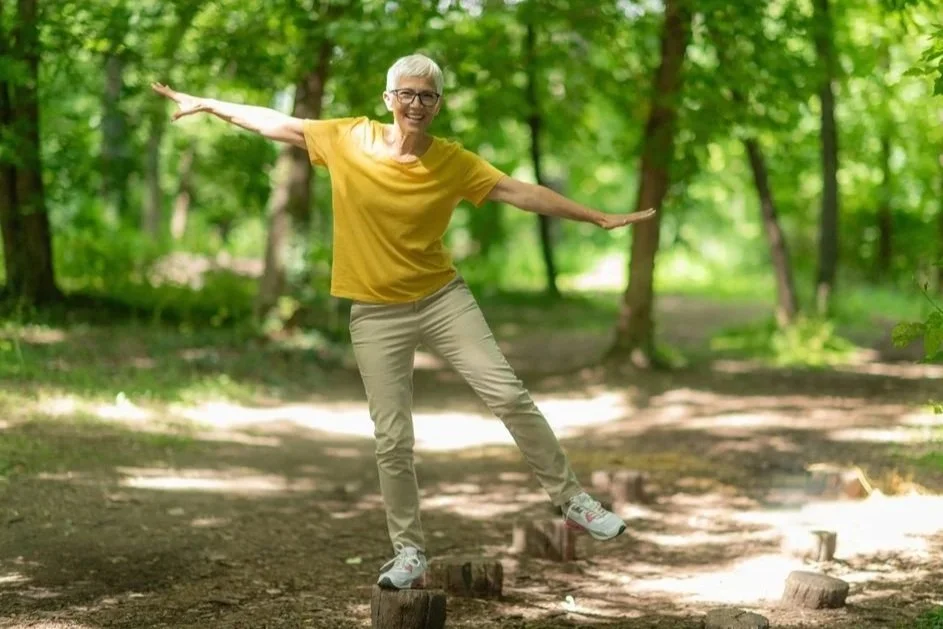
Aging is inevitable. Losing your ability to move, stay active, and do the things you enjoy doesn’t have to be.
Healthy aging isn’t about trying to move as you did 20 or 30 years ago. It’s about maintaining the strength, balance, mobility, and endurance you need to keep doing what matters to you, whether that’s traveling, gardening, playing with your grandchildren, walking the neighborhood, getting up and down from the floor, or simply moving through your day with confidence.
Regular physical activity plays an important role in maintaining that independence. And as we age, it’s important to think beyond cardio. A well-rounded approach to fitness includes aerobic activity, muscle strengthening, and balance.
Keep Your Heart and Lungs Working
Aerobic activity is anything that gets your heart beating faster. Walking, swimming, cycling, dancing, and many other activities can contribute to your weekly activity.
For older adults, the general recommendation is at least 150 minutes of moderate-intensity aerobic activity each week.
That number may sound like a lot if you’re not currently active, but you don’t have to do it all in one session. Breaking activity into smaller periods throughout the week can make it more manageable.
And there’s no reason to think that exercise only “counts” if it happens in a gym. A brisk walk, an afternoon of dancing, or another activity that gets you moving can all be part of an active lifestyle.
Strength Is a Key Part of Healthy Aging
Muscle strength becomes increasingly important as we get older.
Everyday activities require strength. Standing up from a chair, carrying groceries, climbing stairs, lifting a suitcase, and getting up from the floor all depend on your muscles doing their jobs.
That’s why older adults should do muscle-strengthening activities at least two days a week.
Exercises using resistance bands, body weight, weights, or specialized equipment can all challenge the muscles.
The important thing is to give your muscles a reason to work harder than they normally do.
For many people, Pilates and functional fitness can be particularly valuable. You can adapt exercises to your current ability while focusing on the strength and control needed for real-life movement.
Don’t Forget About Balance
Balance can become more challenging with age, and falls can lead to serious injuries, including fractures, that may take longer to recover from and affect your independence.
A well-rounded fitness routine should include activities that challenge your balance and coordination. Pilates, tai chi, dancing, and functional exercises can incorporate balance while also working other aspects of fitness.
Better balance isn’t just about standing on one foot. It’s about being able to respond when your environment changes, including stepping over an obstacle, turning quickly, walking on an uneven surface, or shifting your weight while reaching for something.
We offer balance exercises through our online membership, making it even easier to practice your balance wherever you are. These 1- to 3-minute videos give you simple ways to work on your stability and build confidence in your everyday movement.
Look for Movement That Does More Than One Thing
Movements that can combine multiple activity types, whether it’s aerobic, strength, or balance, are especially useful.
Dancing, for example, can challenge your cardiovascular system while also requiring coordination and balance. Sports can combine aerobic activity with strength, agility, and balance. Tai chi can work on balance and coordination while keeping you moving.
Pilates for seniors can similarly bring several components together, challenging strength, mobility, stability, coordination, and body awareness within the same session.
That’s particularly useful as we age because everyday movement rarely asks us to use just one physical skill at a time.
Mobility Matters, Too
Strength and balance are important, but they work best when you can move your body through an appropriate range of motion.
Mobility helps you bend, reach, rotate, squat, step, and transition between positions. Maintaining mobility can make everyday activities easier and allow you to continue participating in the activities you enjoy.
This is one reason a balanced approach to fitness is so important. You don’t want to focus exclusively on one aspect of physical fitness while overlooking the others.
Start Where You Are
If 150 minutes of activity a week feels out of reach right now, that doesn’t mean you shouldn’t start.
Do what you can today and build from there. Even five minutes of physical activity can provide health benefits.
Maybe your starting point is a five-minute walk. Maybe it’s a few simple strengthening exercises. Maybe it’s working on balance while holding onto a stable surface. The important thing is finding a starting point that feels achievable and gradually building your capacity.
Healthy Aging Is About Staying in Motion
You don’t have to stop doing the things you love as you grow older. In fact, maintaining your physical capabilities can help you continue doing them.
Think about the activities you want to do five, 10, or 20 years from now. Then consider what your body needs to make those activities possible.
You need a heart and lungs that can handle activity.
You need muscles that can support you.
You need balance and coordination to navigate the world around you.
And you need enough mobility to move with control and confidence.
That’s what healthy aging is really about: building and maintaining the physical capacity to live your life.
Our Pilates Instructors Meet You Where You Are
Your fitness journey should be as individual as you are. Our Pilates instructors take a personalized approach, understanding how your body moves and what you want to accomplish. Call or text us at 303-472-6743 to schedule your session and discover how we can help you move with greater strength and confidence.
