
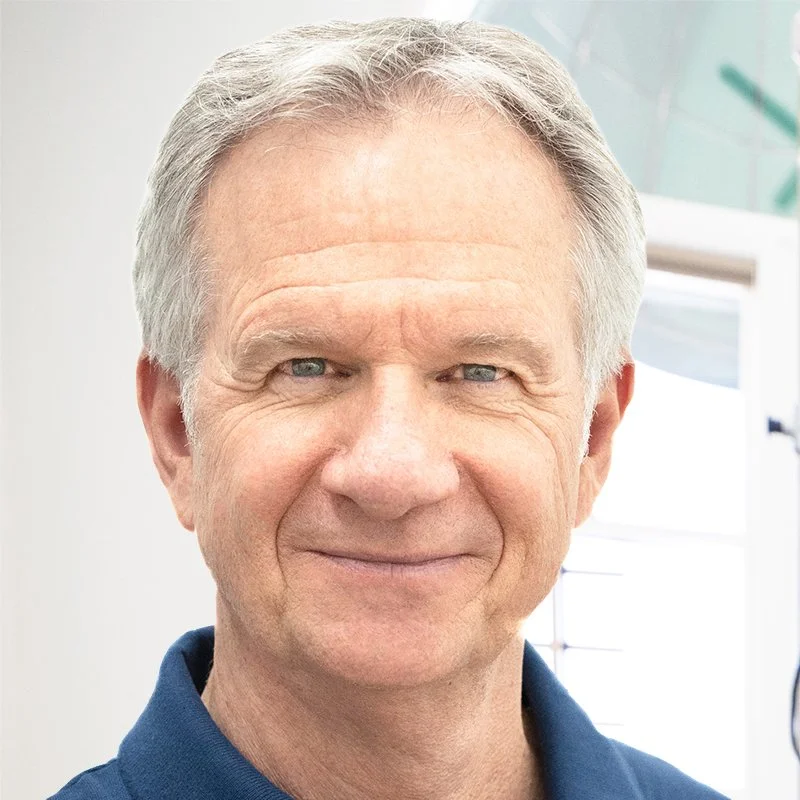
Michael Mathews
Schedule a Session
Mike's Rates
$90, individual session for movement or acupuncture
$60 per person, duet session
Sessions are 50 minutes.
Michael is dedicated to helping people improve their health through Pilates and functional training. He believes that movement training is essential to improving people’s comfort, counteracting overuse injuries, and remaining active while aging.
Michael has over 20 years of experience working with individuals recovering from injury, including neck, shoulder, hip, knee, and low back pain. He has a detailed understanding of anatomy as he originally practiced as a massage therapist before focusing on Pilates, functional training, and acupuncture. Michael's background includes working with orthopedic and spine injuries as an aide in a physical therapy clinic (2 years) and chiropractic clinic (3 years).
When Michael is not at the studio, you will find him with family and friends, road and mountain biking, skiing, and riding his longboard.
Physical Mind Comprehensive Pilates Teacher Training Program
American Council on Exercise Personal Trainer
Colorado School of Traditional Chinese Medicine, Masters in Acupuncture
Boulder School of Massage Therapy, Graduate
Metropolitan State University of Denver, AA Science
Multi-Disciplinary
Movement & Wellness Expert
A Q&A with Michael Mathews of Taylor Pilates and Fitness
-
I’ve been working in the wellness space since 1991. I started out as a massage therapist and later became a personal trainer and Pilates instructor. I’ve been teaching Pilates now for 23 years. I’m also a licensed acupuncturist and spent three years in a physical therapy clinic in Vail, working with people recovering from injuries like torn ACLs, back pain, and neck issues. These days, I focus primarily on Pilates, with acupuncture available upon request.
It became a key part of my recovery and, ultimately, a foundation for everything I love to do — skiing, trail running, staying active, and feeling strong in my body. It was so transformative that I decided I wanted to help others experience the same comfort and ease in their own movement.
-
A few things, really. First, I’m an athlete. I’ve always loved the challenge of strength and flexibility training — yoga, Pilates, and strength training. I’ve been helped by massage, chiropractic, and PT for my own injuries, and I wanted to be someone who could help others in the same way.
Also, working as a massage therapist in Vail let me live the ski-town life. I’d work 3–7 p.m. and have the rest of the day to ski or bike. That freedom was huge. But more than anything, I enjoy helping people get stronger, heal, and evolve.
-
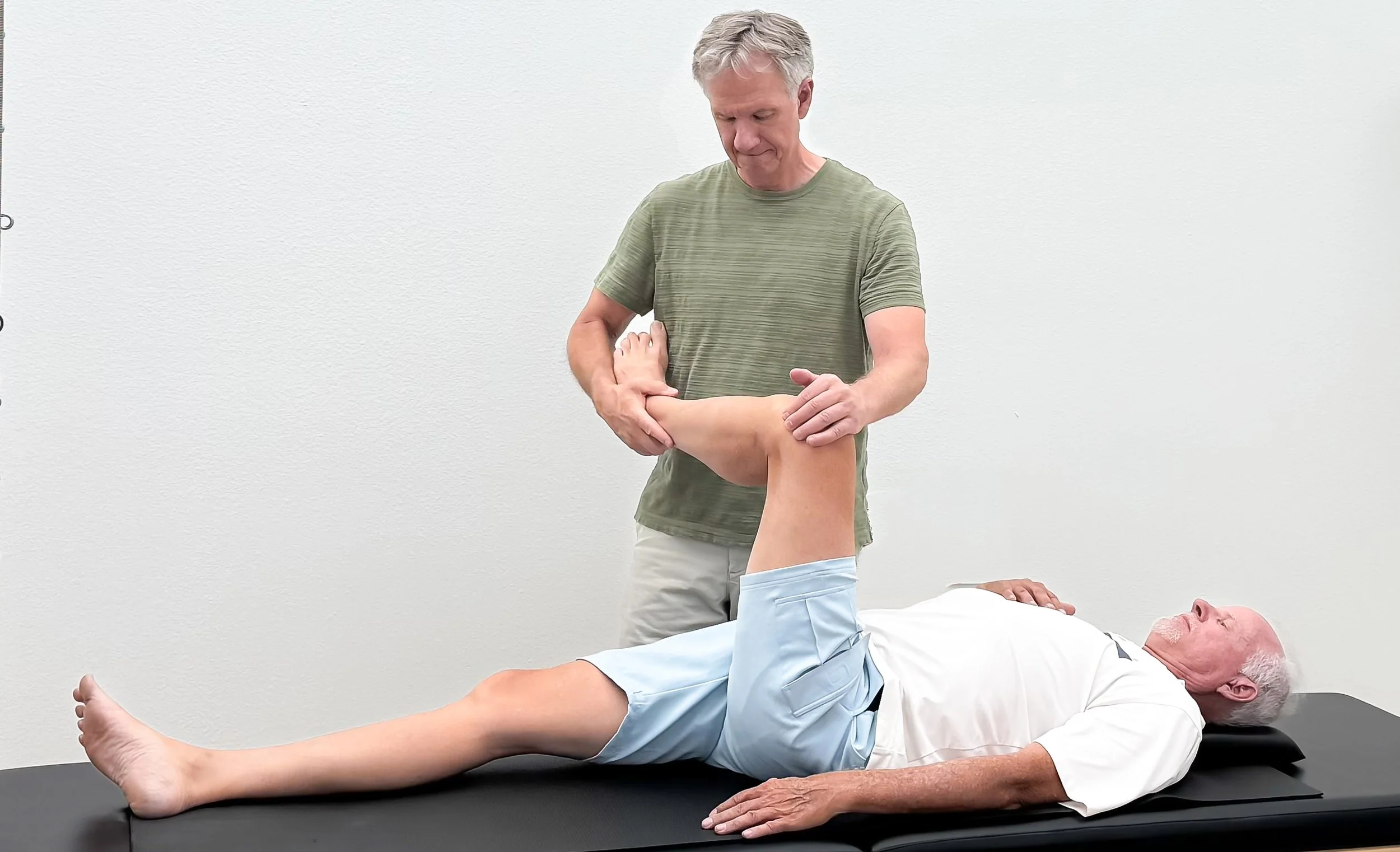
On the Pilates side, I help with both fitness and rehab. Some clients come to me because they like the way Pilates feels and want a consistent movement practice. Others are recovering from pain or injury — like back, shoulder, or hip issues — and we work on stability, strength, and correcting movement patterns.
As an acupuncturist, I’m a general practitioner. I’ve helped people with everything from headaches and arthritis to fertility and digestive concerns.
-
People often ask:
“Can Pilates help with back pain?”
“Is Pilates good for me if I have an injury?”
The answer is: it depends. Everyone is different, so we always take an individualized approach. How long has the issue been going on? What’s been tried before? What’s the person’s motivation to heal? Those are the questions that shape our work together.
-
We start with an in-depth conversation: What’s the issue? When did it start? What’s worked or not worked in the past? Then I assess movement patterns, posture, range of motion, and look for the source of the problem — maybe it’s a tight hamstring, one leg longer than the other, or nerve involvement in the shoulder. The goal is to find the root cause and design a program around improving it.
Sometimes it’s focused rehab. Other times it’s general conditioning. Often, it’s both.
-
Absolutely. One woman came in with back and pelvis pain during pregnancy. After a few months of strengthening and relief, she told me, “I’m coming back after I give birth.” That happens often. People feel better, and they want to keep going. Rehab becomes part of their ongoing self-care and strength-building.
Our bodies tend to return to the path of least resistance, so building and maintaining strength through consistent practice is key.
-
Yeah, I’ve heard it: “Isn’t Pilates for dancers or middle-aged women?” But honestly, a lot of guys avoid it because they’re afraid they’ll get shown up by those same middle-aged women!
In reality, about 50% of my clients are men, especially in private sessions. The ratio in my classes is probably 70% women, 30% men. Once they try it, they usually realize it’s a full-body challenge that builds real strength and control. My own journey into Pilates started when I was working as a massage therapist in a Pilates studio. I tried a few classes and loved the movement quality, the creativity, and how it worked the whole body — not just isolated muscles like in traditional weightlifting.
-
Most people ask:
“What is acupuncture?”
“How does it work?”
“Will it help with my (insert condition)?”
There are a few layers to it. At a basic level, acupuncture affects muscles and nerves. It can reduce pain, increase blood flow, and relieve tension.
There are also trigger point methods — pain in the head may come from tightness in the neck. And then there’s traditional Chinese medicine theory: pain is often caused by stagnation of “Chi” or energy. The needles help restore flow.
Fascinatingly, the meridian lines used in Chinese medicine align with Western concepts of myofascial planes — connective tissue that runs through the body. So, acupuncture sits at the intersection of Eastern and Western understanding.
-
Sure. One time a woman came in with a migraine that had lasted several days. Her mom, a nurse, was ready to send her for an MRI. I followed a technique where I didn’t put needles in the head, but in her foot — based on meridian theory. Within seconds she sat up and said, “I just felt a pop in my head — 80% of the pain is gone.” I didn’t expect that immediate a result, but it was one of those moments where you just go, “Okay, that worked!”
-
It’s the integration. I bring together decades of experience in massage therapy, personal training, Pilates, and acupuncture. That means I’m not limited to just one modality. If someone comes in with a headache, I can evaluate whether it’s muscular, structural, energetic — or all three — and decide the best course of action.
A lot of practitioners have one tool. I bring a full toolbox.
-
That healing is not one-size-fits-all. Whether you’re in pain, rebuilding strength, or just looking to move better, there are tools and approaches that can help. It takes a partnership between practitioner and client. I’m here to meet people where they are, help them feel better, and keep them moving forward.