
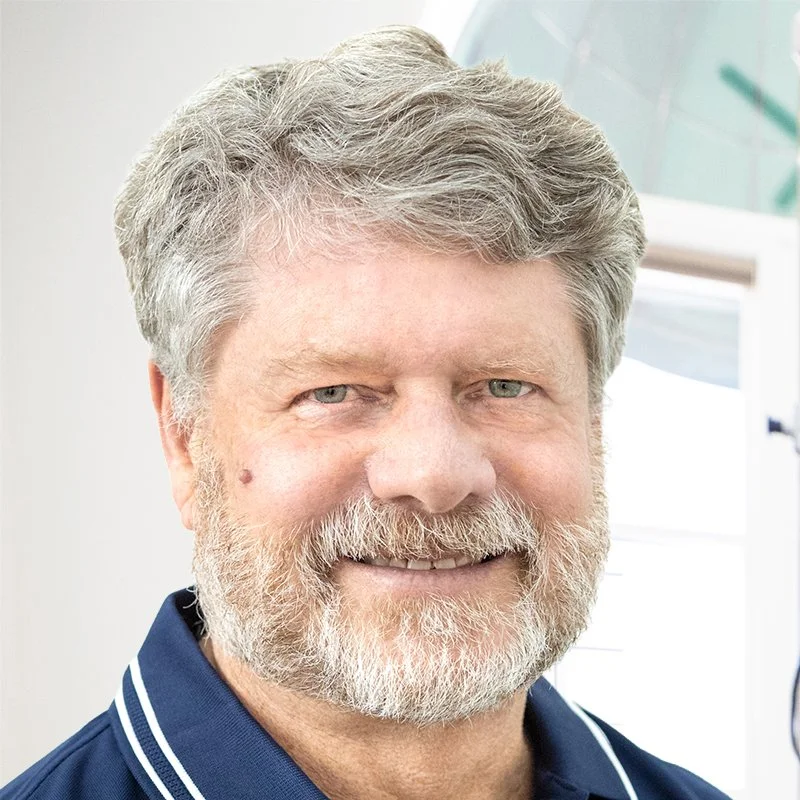
Andrew Kerr
Schedule a Session
Andrew's Rates
$120, 60 minutes
$180, 1.5 hours
$230, 2 hours
Please wear loose fitting shorts and a t-shirt to your appointment.
Andrew’s Studio Dates
Andrew visits the studio from Colorado's western slope every month to provide exceptional Myofascial Release (MFR). Here are Andrew’s upcoming dates at the studio.
Thursday, October 15th
Friday, October 16th
Saturday, October 17th
Thursday, November 12th
Friday, November 13th
Saturday, November 14th
Andrew has been a physical therapist for over 35 years and specializes in soft tissue work, myofascial release, and manual therapy. His goal is to treat the whole body and to find the methods that work best for each individual to facilitate healing. With his customized approach to physical therapy, Andrew focuses on appropriate muscle activation, increasing stability, and turning positive changes into permanent movement patterns. Andrew was fortunate to take courses from John Barnes, who pioneered the field of myofascial release (MFR), and to bring that subtle yet profound bodywork to his patients.
After decades of experience in a variety of settings including trauma care in hospitals, long-term rehab facilities, outpatient care clinics, and home care, Andrew looks forward to having the time and space to utilize his physical therapy and MFR skills at Taylor Pilates and Fitness.
When Andrew is not at the studio, you will find him hiking, snowshoeing, bicycling, camping, backpacking, exploring, and gardening.
Intuitive Healer, Hands-On Therapist, and Lifelong Fixer
A Q&A with Andrew Kerr of Taylor Pilates and Fitness
-
I’ve always been a fixer. Even as a little kid, I loved taking things apart and putting them back together — whether it was blenders, bikes, or record players. I also love working with my hands: pottery, woodworking, gardening. My first degree was in psychology, and I learned a lot of things I didn’t want to do. But I also discovered that I needed to work with people.
When I stumbled into a conversation with a physical therapist at a barbecue, something clicked. Physical therapy combined everything I enjoyed: working with my hands, fixing things (but this time, the human body), helping people, and — no suits or ties! After that conversation, I never looked back. I went back to school for my physical therapy degree, and here I am, over 40 years later.
-
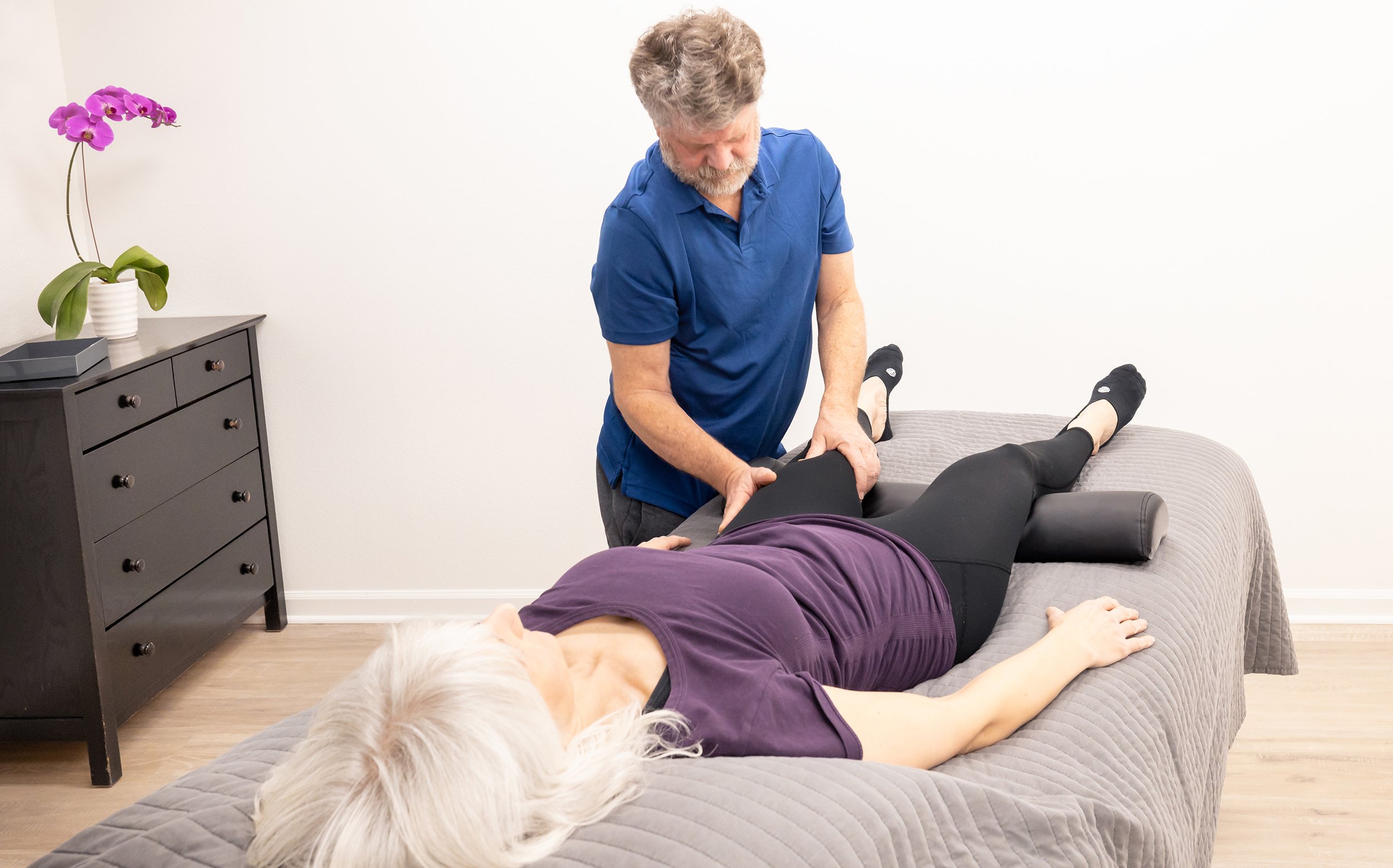
Absolutely. Traditional physical therapy tends to follow a very linear, Western model: assess, diagnose, and prescribe a treatment plan. That never fully resonated with me. I’ve always preferred getting my hands on people and letting the body tell me where to go.
When I treat someone, I listen — not just to what they say, but to what their tissues tell me. It might start with a shoulder injury, but my hands may be drawn across the chest, into the abdomen, even to the opposite hip, depending on where I feel restrictions. One client came in with migraines; I ended up working deep in her abdomen, and that treatment directly influenced her headache symptoms. The body is interconnected in ways we often can’t see on paper.
-
I use a wide variety of tools depending on what a person’s body needs that day. This can include:
Myofascial release (addressing restrictions in the body’s connective tissue)
Manual therapy (hands-on mobilization of joints and soft tissues)
Craniosacral therapy (extremely light touch to release tension and improve flow)
Reiki and energetic work (non-touch or very light-touch energy balancing)
Posture training and education (helping clients understand body mechanics and self-care)
Craniosacral work, in particular, helped me learn to trust what I feel. It’s so subtle — sometimes applying no more pressure than the weight of a dime on your fingertips — but it taught me to listen to the body’s signals.
-
Absolutely. Education is a huge part of what I do. If clients understand what’s going on in their bodies, they can take better care of themselves. I help them understand what to do and just as importantly, what not to do — to keep their bodies happy.
-
I don’t come into a session with a rigid plan. Every person is different. I let my hands and the client’s body guide me. Sometimes, what seems like a minor issue leads me to uncover a much deeper, more important restriction elsewhere. My goal is always to listen, respond, and work with the body to help it heal.
-
Fascia is connective tissue, and it’s everywhere in your body — around every nerve, muscle, organ, under the skin, even around your brain. It’s like a continuous web that holds everything together. There’s not a single area of the body that doesn’t involve fascia.
-
Myofascial release is one of several hands-on techniques I use to release restrictions in this connective tissue. Restrictions can create tension or dysfunction that may show up as pain, limited movement, or other symptoms. Often, where you feel the symptom isn’t where the problem originates. The fascia is so interconnected that releasing one area can affect a completely different part of the body.
-
A lot of people assume I do massage because it's hands-on work, but it’s very different. Massage typically focuses on relaxing tight muscles — and that can feel great, but tight muscles are often just a symptom. My goal is to find the source of the problem and release it. That’s why people might feel better for a few days after a massage, but the tightness often returns. When I release fascial restrictions, it creates more lasting changes in the body’s structure and function.
-
Often quite permanent. I had one client who’d been dealing with debilitating hip pain for years — she had seen multiple practitioners with little relief. After just one session where I worked on her fascia, the pain was dramatically reduced within days, and it’s never returned. Because fascia is such a fluid, integral system — almost like an organ — when you free up restrictions, the body can reorganize itself in a much more sustainable way.
-
Both. I treat acute injuries and long-standing chronic pain, but I also see people who feel generally “stuck” or restricted, even if they’re not in pain. Sometimes clients come to me because their Pilates instructor, like Ashley, notices limited movement patterns that could be improved. After I release restrictions, they move better. Some clients also come in monthly for ongoing maintenance. The truth is, I believe anyone can benefit — even people who feel pretty good — because everyone carries some degree of restriction they may not even be aware of.
-
What I do is unique — it’s not massage, not typical physical therapy, and not something you can fully understand until you experience it. I’m not applying a set protocol; I work intuitively with each person’s body to find and release what’s holding them back. It’s collaborative — my hands listen to the body and guide me where we need to go. And sometimes, that includes emotional components, too, because we carry tension in more ways than just physically.